
Classic Cheops North
Avalancheolsonizak · Feb 2, 2025 · Glacier

Quick report
- Weather
- cold, cloudy, sunny
- Ride Type
- steepSlopes, alpineSlopes, mellowSlopes
- Stayed Away
- convexSlopes, cutBlocks, sunnySlopes, openTrees
- Riding Quality
- good
- Snow Conditions
- powder, windAffected
Classic day up Balu, lots of people out enjoying the cold dry powder. We went up Connaught along with plenty of others and did our best to space out where there was overhead exposure (a decision validated by the fact we crossed over some fresh avy debris at the base of Frequent Flyer on our way out). We dropped into Cheops North 5 and did a ski cut mostly to observe sluffing/wind effect and found 30ish cm of soft snow. Sluff management was necessary but no significant movement was noted
Weather
- Avg Temp
- -15
- Wind Speed
- windSpeedLight
- Blowing Snow
- light
- Sky Condition
- fewClouds
- Wind Direction
- W
- New Snow24 Hours
- 4
- Storm Start Date
- 2025-02-16
- Temperature Trend
- steady
- Precipitation Type
- none
Cold and (mostly) clear day in the pass. Nice and sunny in the morning with building cloud cover and ridgetop wind in the afternoon.
Snowpack
- Obs Type
- summary
- Site Aspect
- N, E, NE
- Site Elevation Band
- alp, tln
- Surface Conditions
- newSnow, surfaceHoar, variable
The walk up the valley had nice soft snow with a 20ish cm ski pen. There was significant surface hoar growth at and below treeline. The ridge up Cheops was highly variable snow ranging from soft storm snow to hard wind slab. Snow within the bowl was very good with some sluffing in steep terrain at the entrance and we did observe some blowing snow sluffing over the cliffs above us on the skier's right
Avalanche
- Avalanche Size
- 1.5
- Start Zone Aspect
- S
- Avalanche Character
- looseDry
- Number Of Avalanches
- 1
- Runout Zone Elevation
- 1500
- Avalanche Observation
- 12hrsAgo
- Avalanche Occurrence Datetime
- 2025-02-17T21:00:00.000Z
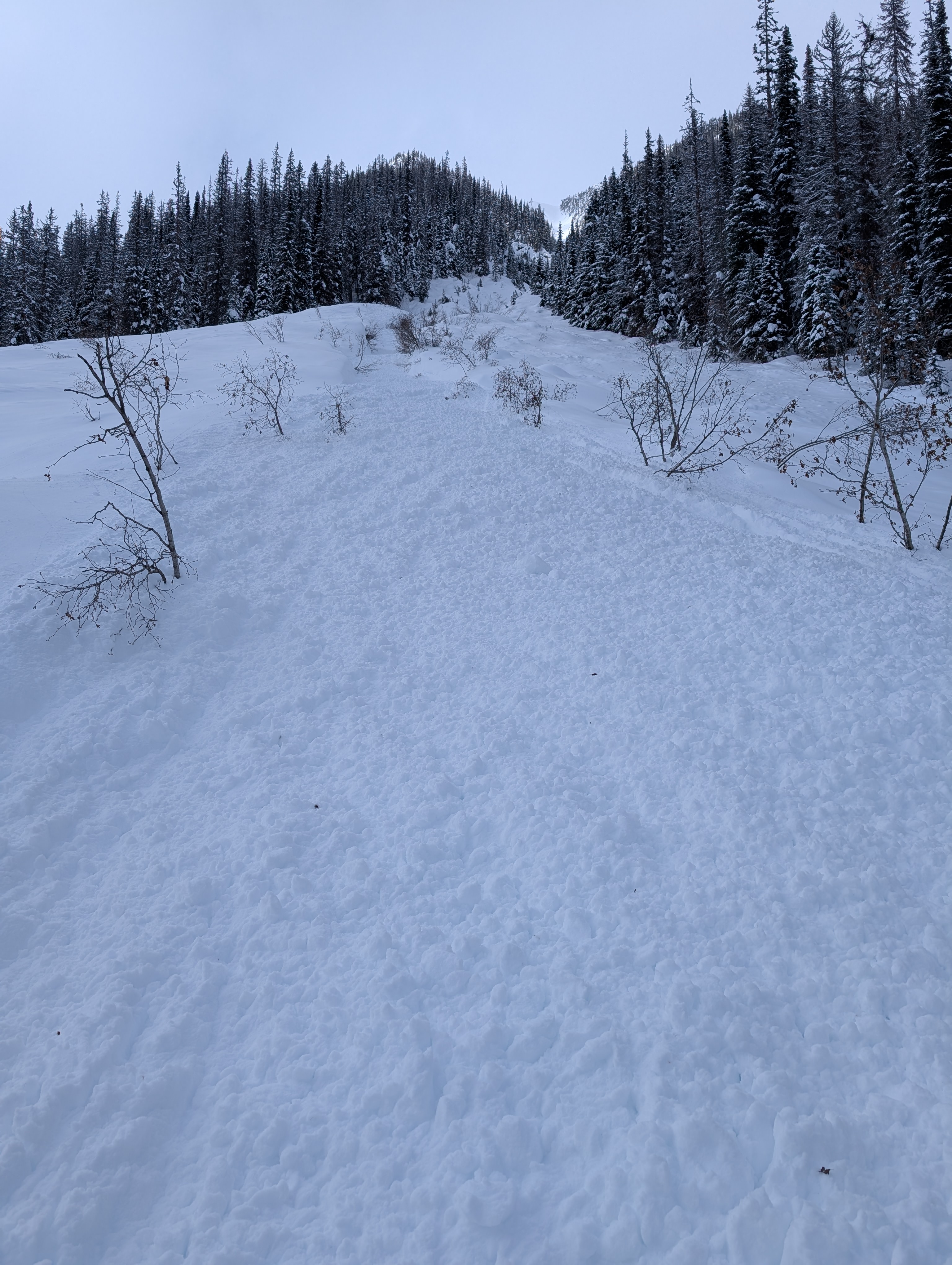
We walked past Frequent Flyer around 9:45 and it was clear, on our way out around 1:15 we found that the skin track was buried by avy debris. We couldn't identify where the start zone was or what the trigger type was but we assumed it was a dry loose that had been triggered a couple hundred meters up and had run to the bottom of the path. We also observed several small size 1 dry loose on solar aspects around cliffs.