
Zoa North Slopes
Quick reporttim.mccll · Feb 2, 2025 · Coquihalla
Avalanche
- Run Length
- 150
- Slab Width
- 20
- Trigger Type
- skier
- Wind Exposure
- crossLoadedSlope
- Avalanche Size
- 1.5
- Slab Thickness
- 60
- Trigger Sub Type
- accidental
- Start Zone Aspect
- NE
- Vegetation Cover
- sparseTrees
- Start Zone Incline
- 40
- Avalanche Character
- stormSlab
- Number Of Avalanches
- 1
- Start Zone Elevation
- 1700
- Runout Zone Elevation
- 1675
- Weak Layer Burial Date
- 2025-01-31
- Avalanche Observation
- 24to48hrsAgo
- Start Zone Elevation Band
- tln
- Avalanche Occurrence Datetime
- 2025-02-02T23:00:00.000Z
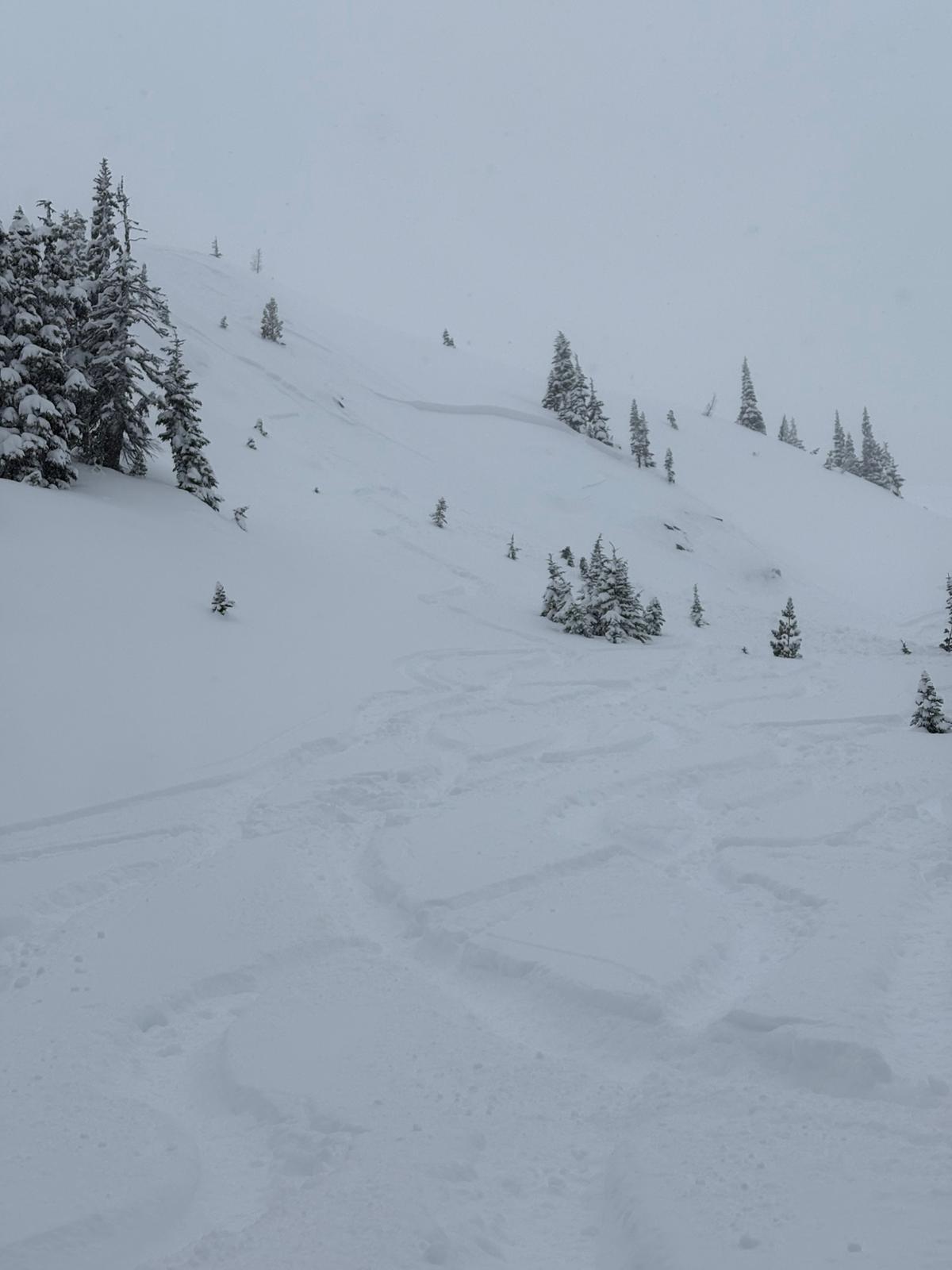
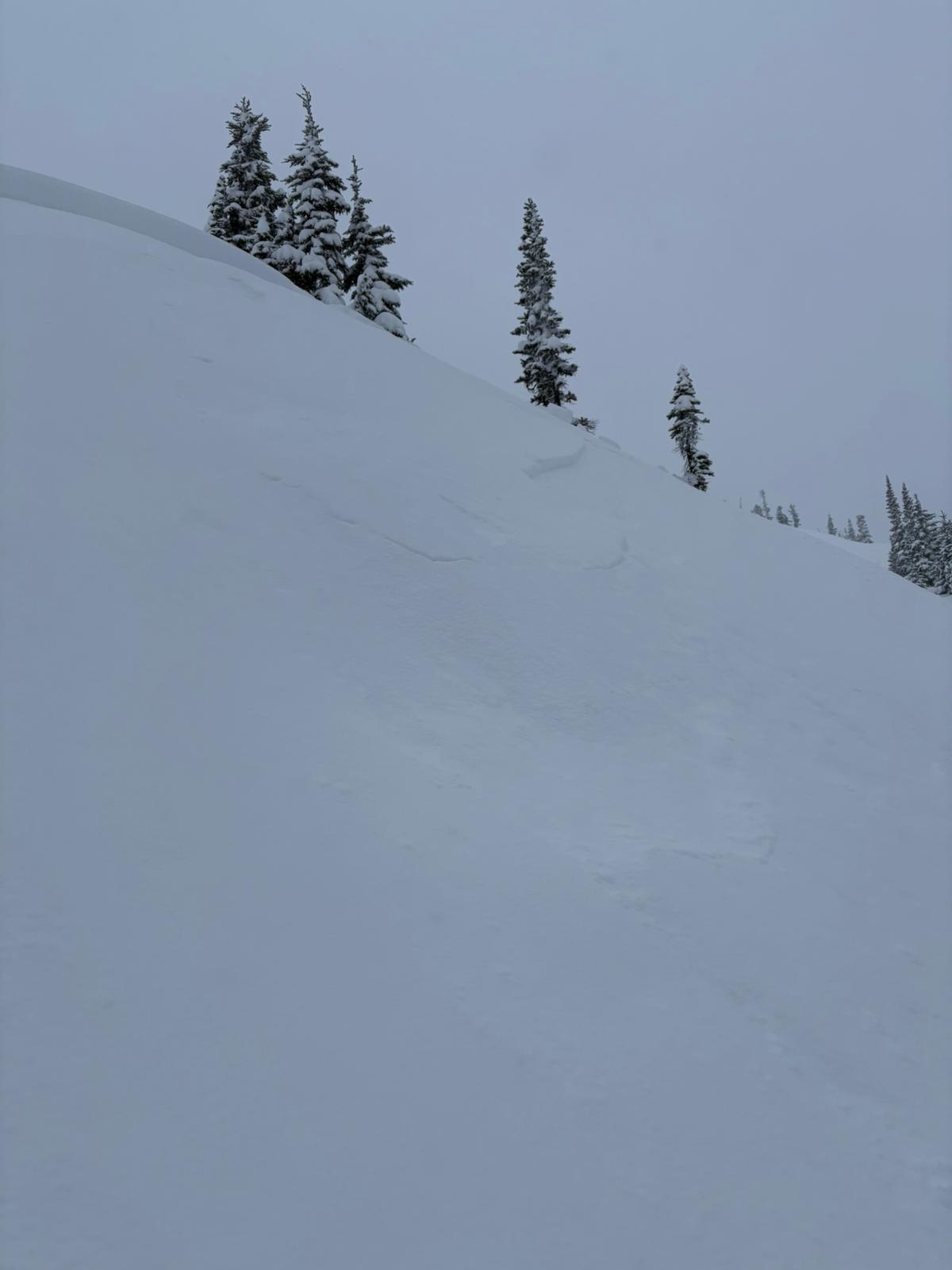
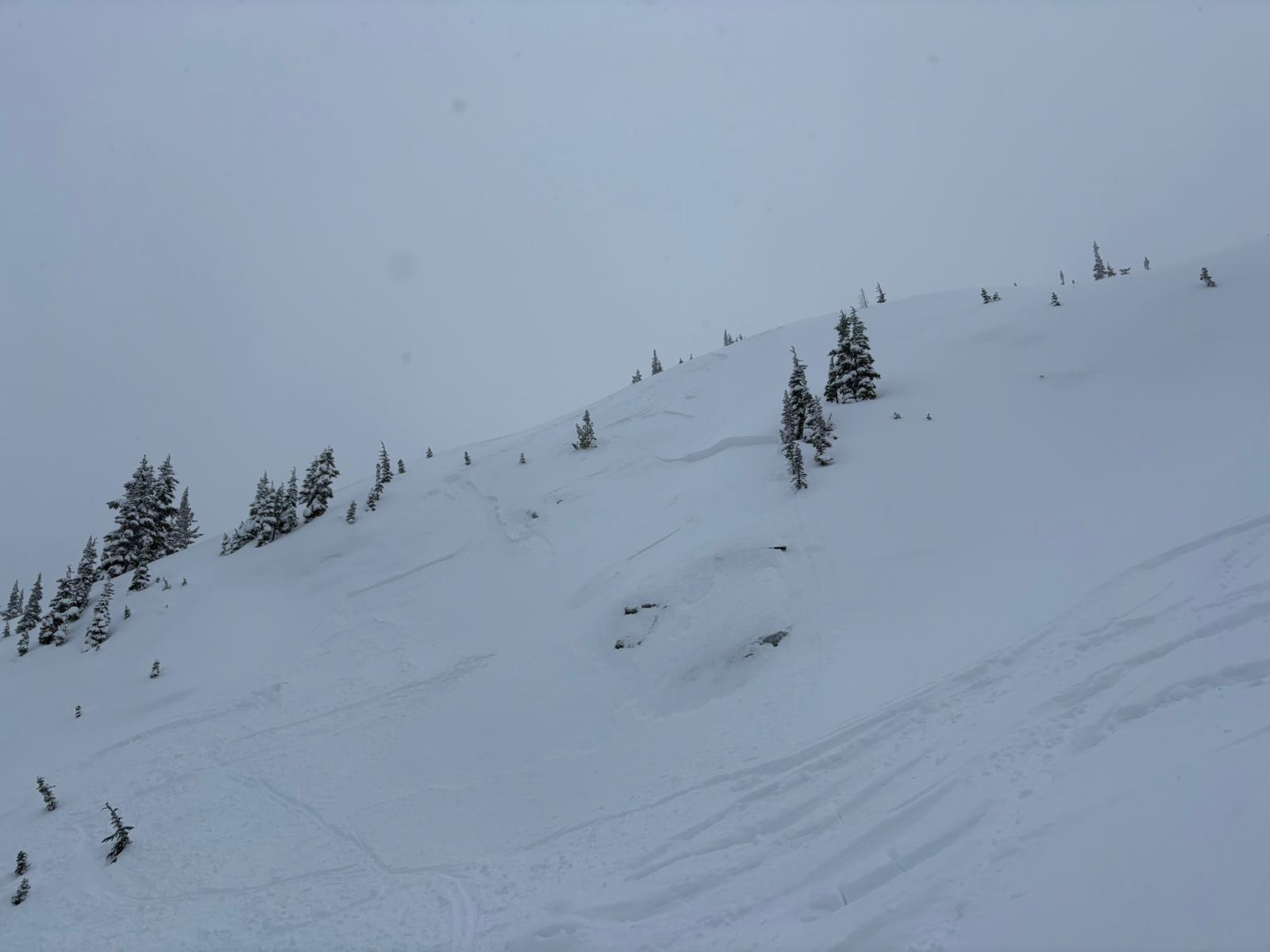
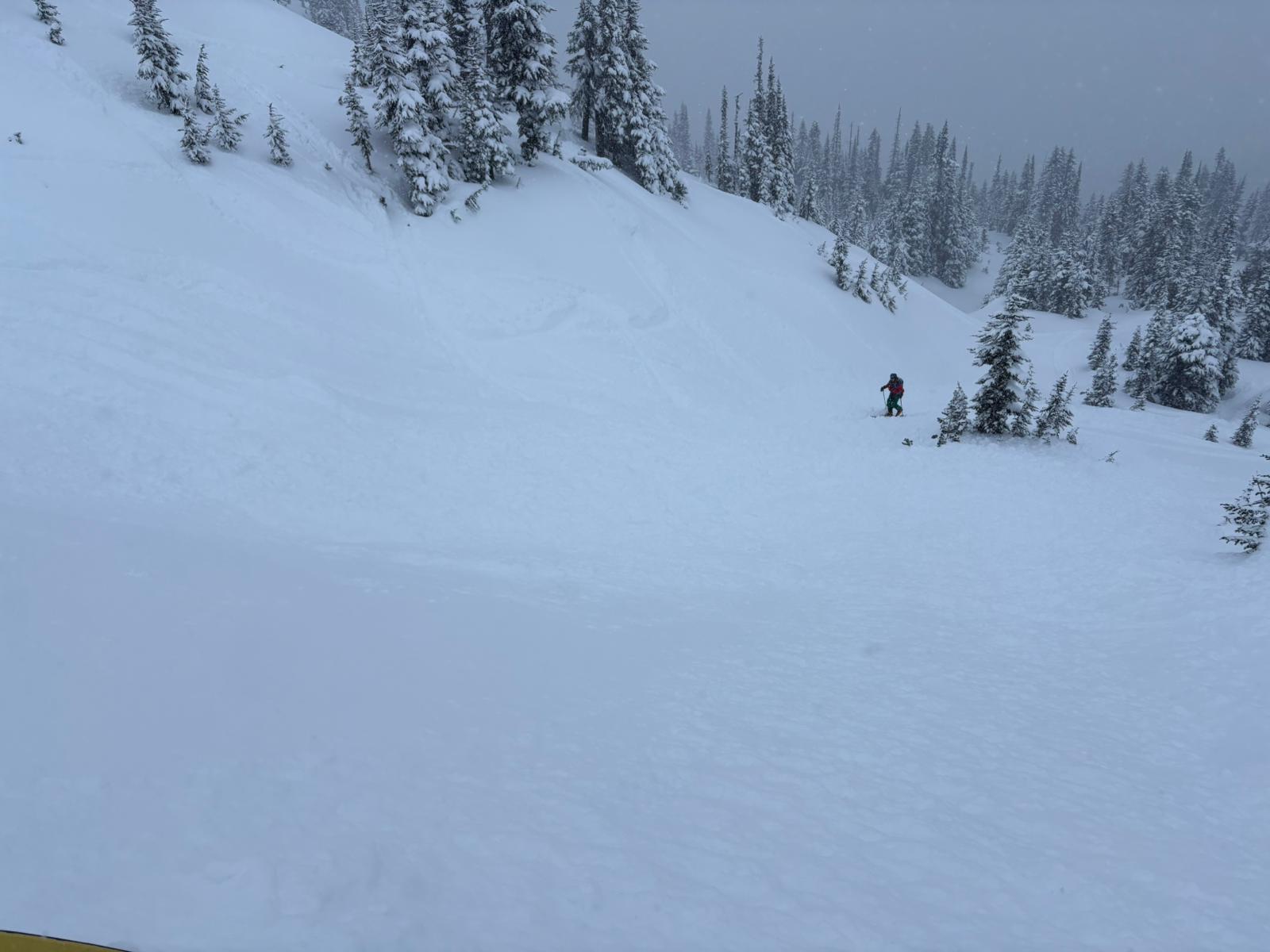
Skier unintentionally triggered small slab (crown 15 cm, ~5 m wide) that subsequently triggered a larger slab (up to 60 cm deep, 20 m wide) on the lee side (NE) of a bulge. The slab broke on a small but steep convex slope that appeared to be mostly unsupported below the roll over where the coverage was thin, note exposed rocks and ice. The avalanche ran on a firm bed surface, specifically a firm but breakable series of crusts (1F - P) that developed during the two week dry period. The storm slab stepped down and released another thin slab (10 cm) within the series of crusts. These crusts consist of a combination of melt/freeze crusts that are somewhat bonded and characterized by variation across subtle changes in aspect. The resulting debris was fairly soft and compressible under foot. In all, the avalanche revealed features of the snowpack very much consistent with the results of a compression test nearby. This avalanche, lacking a cohesive slab, remained isolated to a small terrain feature but future loading and larger terrain features, alpine bowls and other open slopes, could become increasingly prone to larger avalanches.