Laxgalts'ap Avalanche
Quick reportstephen.chapman540 · Mar 8, 2026 · Nass
Quick report
- Weather
- cloudy
- Ride Type
- denseTrees, mellowSlopes, openTrees
- Riding Quality
- amazing
- Snow Conditions
- deepPowder
- Avalanche Conditions
- avalancheConditionSnow
Avalanche
- Run Length
- 100
- Slab Width
- 200
- Trigger Type
- snowmobile
- Wind Exposure
- crossLoadedSlope
- Avalanche Size
- 3
- Slab Thickness
- 100
- Trigger Sub Type
- remote
- Start Zone Aspect
- NW, W
- Trigger Distance
- 20
- Vegetation Cover
- openSlope
- Start Zone Incline
- 38
- Avalanche Character
- stormSlab, windSlab
- Number Of Avalanches
- 1
- Start Zone Elevation
- 1280
- Runout Zone Elevation
- 1200
- Avalanche Observation
- 12hrsAgo
- Start Zone Elevation Band
- alp
- Avalanche Occurrence Datetime
- 2026-03-08T21:00:00.000Z
Incident
- Group Size
- 4
- Terrain Trap
- trees
- Group Activity
- snowmobiling
- Number Injured
- 0
- Number Involved
- 0
- Number Caught Only
- 0
- Number Fully Buried
- 0
- Snow Depth Trigger Point
- variable
- Terrain Shape Trigger Point
- convex
- Number Partly Buried Able Breathing
- 0
- Number Partly Buried Impaired Breathing
- 0
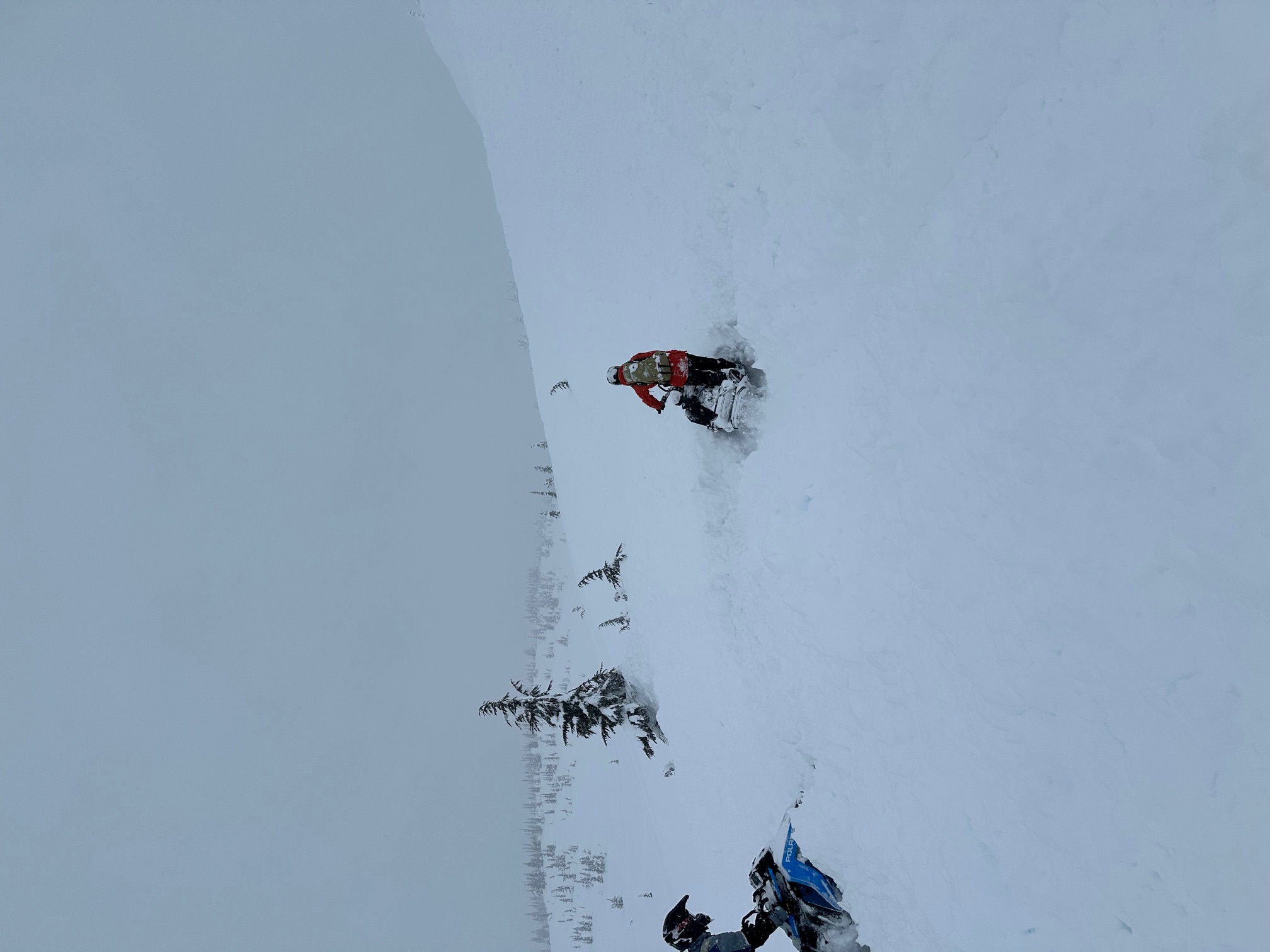
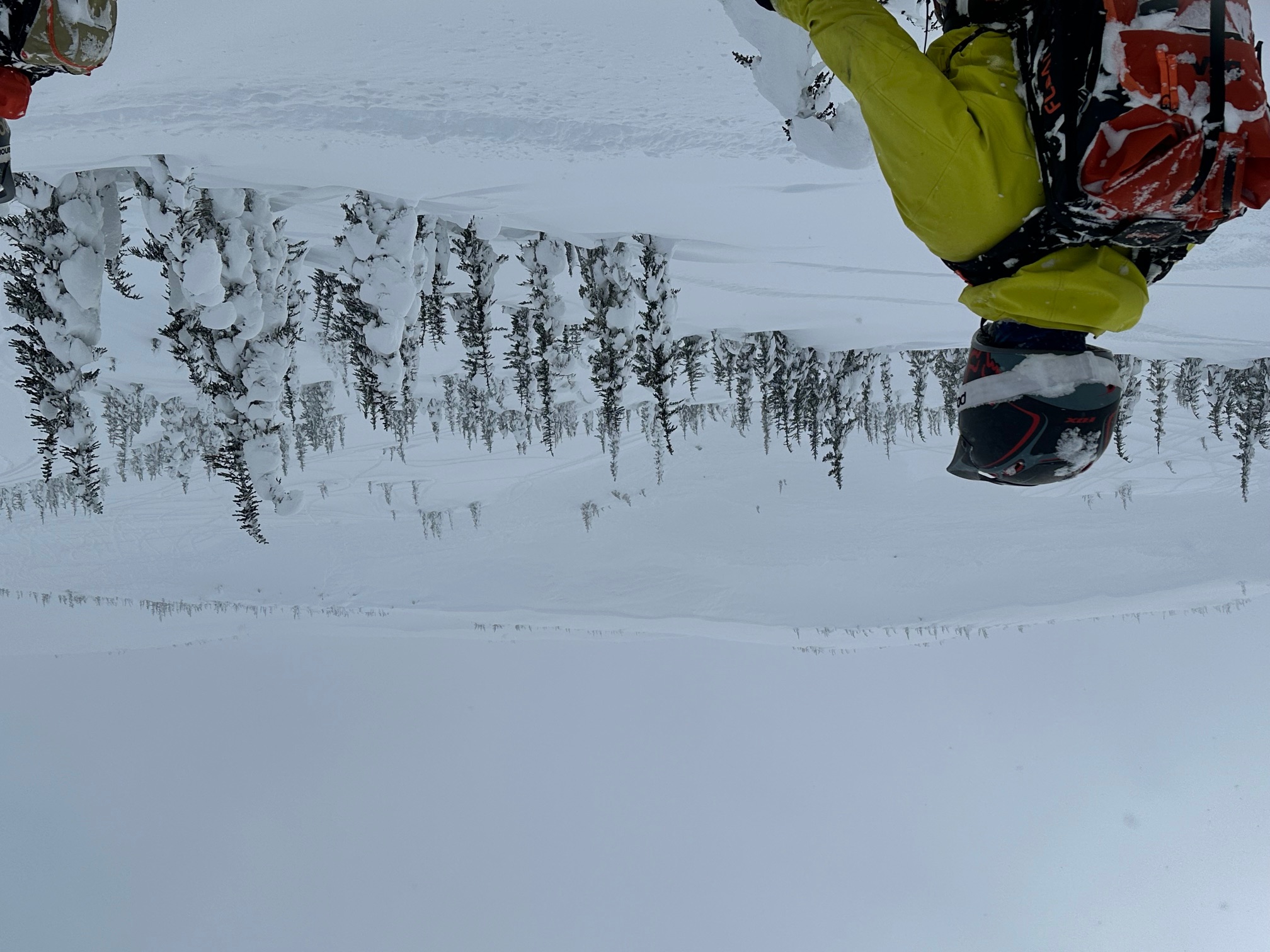
While snowmobiling near Laxgalts'ap, we had been riding on either shoulder of the first large open slope in the area and had not observed any signs of recent avalanche activity. The gut of the slope had largely been avoided at the time of the slide but some tracks had been made through the runout zone. We believe the avalanche was likely remotely triggered by one rider, accompanied by a buddy behind, who had moved into position to assess a potential descent on the north side of the slope, the right side shown in the photo. The snow was wind effected with the slope heavily loaded and we suspect the snowpack was thinner over the top, allowing us to get to a weak layer which likely created the settlement that triggered the slide. Note that this ultimately propagated a crown ~200m long towards the South. A separate rider was observing from a safe zone several hundred meters beyond the runout to the North and called it out on the radio. At the time of the avalanche, one rider was actively riding in the North edge of the runout zone while the other three remained outside of it. The rider within the runout zone was positioned in a location and direction that allowed them to avoid the slide without any issue.